
PRIEST HOLE
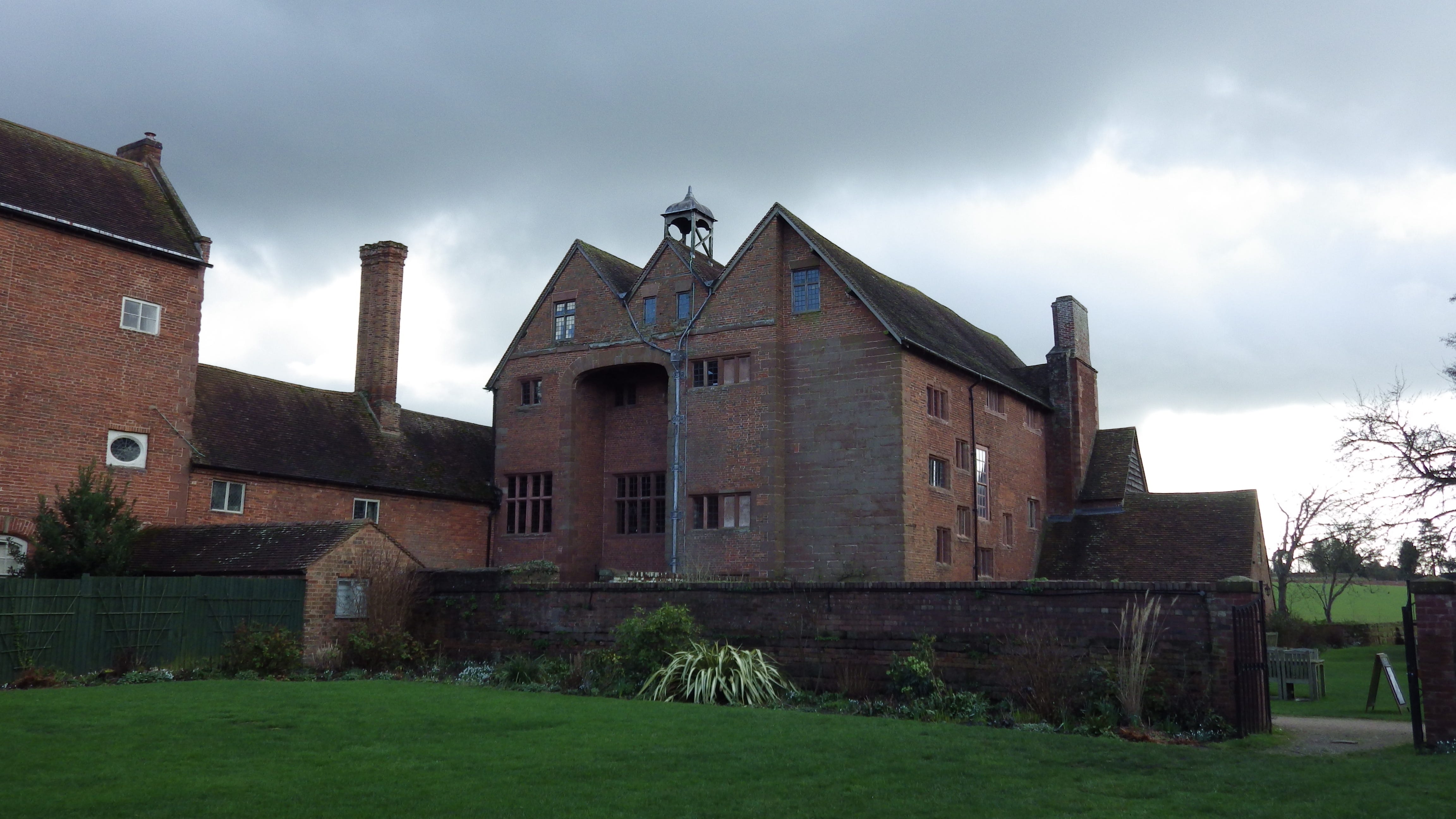
A story about a man in hiding. Inspired by Harvington Hall, Worcestershire, which is one of the most story-filled places you can visit.

PRIEST HOLE
1606
Father John could not see because it had become too dangerous to light his candle. He could neither stand nor lie in this secret hole, but only sit, legs folded up in front of him. On the bottom rung of his ladder, which served as a shelf, were his food and drink – a stone bottle with a dreg of small beer in the bottom, and an apple. Each day he had been allowing himself one sip of beer and one bite of apple. Now there was scarcely a core left. He had picked out the pips and chewed on them like little nuts. For all that he told himself he was not moving his limbs and should not need to eat, the pain in his belly was sharpening. And he was cold, so cold.
It was February and when he had hurried in here, however many days ago, there was a chilly wind whistling through the old Hall’s ill-fitting windows. Now as he sat, faint and dozing, he caught himself shivering. At one point he woke to find his leg had been twitching against the ladder, rattling it. Dear God, I mustn’t let them hear me. He deliberately tried to exercise, tried to warm himself by wriggling his toes. But he had to be careful not to knock against the wood panelling that enclosed him. If ever a man was awake in his coffin, thought the young priest, I am he. It would be so easy to climb up the ladder and push the trap door open. At least the searchers would give him something to eat and maybe even let him warm himself by the fire for a while. But no – whatever happens, no, not that. Even if the Lord takes me as I lie in this box, it’s better than that. I must try and pray.
He could hear them now, the straining of men and the splintering of wood as they used crowbars to pry the panelling off the walls in the chapel. Of course they did not know it as a chapel, for them it was only a bedroom, for his crucifix and candlesticks and chalice had all been stowed away under the floorboards as soon as word had been heard, in the anxious tone of one of the gardener’s boys, that riders were approaching from the Worcester road. Father John had been saying Mass at the time, to a congregation of Lady Pakington and those of her household, most in fact, who still adhered to the old religion. The roughness of the blacksmith and cooper next to the neatness of the lady’s maids, all taking Holy Communion together. Here in this red brick mansion secluded on its island in a reedy moat, surely it would harm no-one if a few people worshipped the Christian God through a Church whose earthly head was away in Rome, rather than King James in London.
It had seemed things were fairly quiet now in this new century, this new reign – until last November when a gang of young fellows of the patrician class had taken it into their heads to put gunpowder under Parliament House, thinking somehow that bloodshed and assassination were the best way to win back freedom for Catholics. The Holy Father himself had tried to quash this mad attempt through a message to Father Garnett, but Catesby the ringleader had ignored this, blithely claiming that if the Pope knew what was in hand, he would not hinder it. This Catesby was a troublesome character who had been out in Essex’s Rising against the old Queen, and had been lucky then to have been punished with a mere fine. Father John had often wondered, though he knew he should not, if the realm might have been a lot more peacable now if the usual punishment for traitors had been applied to Catesby then.
Well, it was being applied now. Catesby and the rest of his gang had all undergone it, half hanging then carving up of the innards, and then burning. And every priest would face the same torments soon after their arrest. So that was what Father John kept telling himself. I may be cold and hungry but help me bear it, Lord, help me bear it. I don’t want to be a martyr. I just want to get out of here and get back on my horse and go travelling around our scattered community, helping the people who need me.
Now the hammering and splintering had stopped. He could hear voices. ‘We’ve got down to the brick all the way round,’ said the magistrate Mr Churchill, ‘and there’s nothing behind those walls. We’ve had the floorboards up, found the stuff they use for the Papist services, but there’s no deeper hide in this room.’
‘Well, sir, maybe the bird has flown indeed,’ said one of the searchers. They were local men, mainly from Churchill’s own household, and Father John knew there was some natural respect of rank and wealth among in their minds. After all, in happier times many of them had been happy enough to work for the Papists, or sell them goods.
‘Oh no, indeed, I can assure you he is here somewhere,’ urged another man. ‘Her ladyship herself told me that if I stand in this room and call out his name, he will come out.’
Father John felt a chill as he realised he knew the voice. Matthew Franks, her ladyship’s bailiff. A man who had greeted him so warmly when he had come here, and said how he had been yearning to have to the chance for Holy Communion.
‘You did well summoning us, Franks,’ said Churchill, not unpleasantly, ‘but we were just a little late this time, methinks.’
Franks said, ‘He could never have got away in time sir,’ but somehow the conviction seemed to have leaked from his voice.
I’ll do for you, Franks. Father John knew this was a sinful thought, but was beyond caring. If they don’t bring me down, I’ll bring you down. Put you in here with not so much as an apple to eat. And no-one in this household will pull you out when they know what a traitor you are.
***
2026
‘If any of you can guess where the priest hole is in here,’ said the guide in his warm Midlands accent, ‘We’ll refund your ticket money.’
His group of visitors, mainly the active retired who are the mainstay of the Historic Houses Association, wandered around aimlessly, tapping panelling or looking under the bed. After a few minutes the guide said, ‘Do you give up?’
The tourists made wry smiles to show that they were conceding defeat.
‘All right, look at the fireplace.’ The guide leaned into the fireplace and grasped one of the blackened brass firedogs. He gave it a sharp pull and the brick base of the fire tilted upwards
The visitors chuckled as they realised the fireplace floor was just a blind. A tray of bricks laid on top of a trap door.
‘Almost foolproof, unless the fire was lit,’ said the guide. ‘I don’t think there’s been smoke up this chimney since about 1600. Come over and look down. One at a time, though.’
As his audience leaned in to look down into the gloomy hole at the bottom of the ladder, he said jovially, ‘We’ve several priest holes here but this is the spookiest. When it was discovered, which was only in the 1890s, a skeleton was found in there.’
‘So one of the priests didn’t get away?’ said a visitor with an SLR camera around his neck.
‘We assume so, yes, but we’ve got no records. It could have been someone else. A lot of mysteries in this house. I suspect some of them will always stay mysteries.’
’